
Freshwater pearls begin with freshwater mussels, but not every mussel is suitable for pearl farming. The species farmers choose can influence everything from how many pearls they produce to the pearls’ size, shape, color, and luster.
Although freshwater mussels are found around the world, only a relatively small number have become important in commercial pearl cultivation. China dominates modern freshwater pearl production, while Japan has a long history of cultivating freshwater pearls, particularly around Lake Biwa. Different mussel species have different characteristics, and those differences can affect how well they perform in pearl farms.
Freshwater mussels live in rivers, lakes, and ponds, where they filter tiny organisms and suspended organic particles from the water. In pearl farming, selected mussels serve as hosts for cultured pearls. Depending on the technique, farmers can produce tissue-nucleated pearls, which grow around implanted mantle tissue, or bead-nucleated pearls, which form around a solid nucleus.
So, which freshwater mussels are used for pearl cultivation, and what makes each one different? Let’s take a closer look.
Triangle Sail Mussel
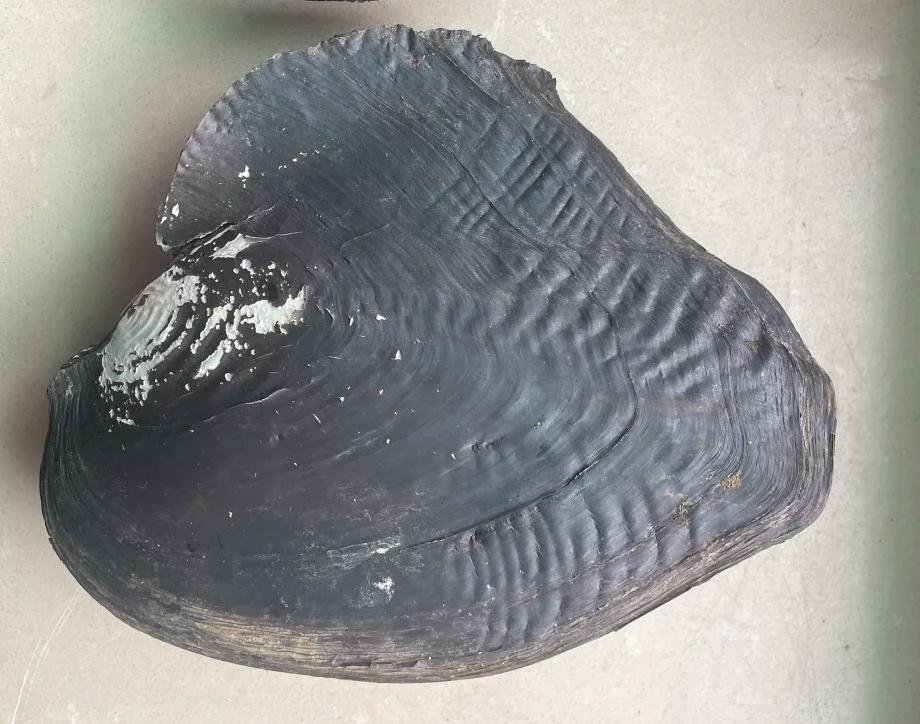
The triangle sail mussel (Hyriopsis cumingii) is native to China and is one of the most important species in the country’s freshwater pearl industry. Its name comes from the distinctive triangular, sail-like extensions along the rear edge of its shell. The shell is relatively thick, and its inner surface has a well-developed layer of nacre, the material that gives pearls their characteristic luster.
One reason this species is so valuable to pearl farmers is its suitability for producing multiple cultured pearls in a single mussel. It is widely used to produce freshwater pearls in a range of sizes, shapes, and colors, although the final results depend on the mussel’s genetics, farming conditions, and cultivation techniques.
Selective breeding has also helped improve pearl color. One example is Shenzi No. 1, a selectively bred variety developed for its purple pearl-producing characteristics. Research and institutional reports have documented a purple pearl production rate of 45.8% under specific cultivation conditions. This is an important breeding result, although it should not be interpreted as a guaranteed rate for every farm.
By combining suitable mussel varieties with careful breeding and cultivation practices, pearl producers continue to improve the consistency and quality of freshwater pearls.
Cockscomb Mussel
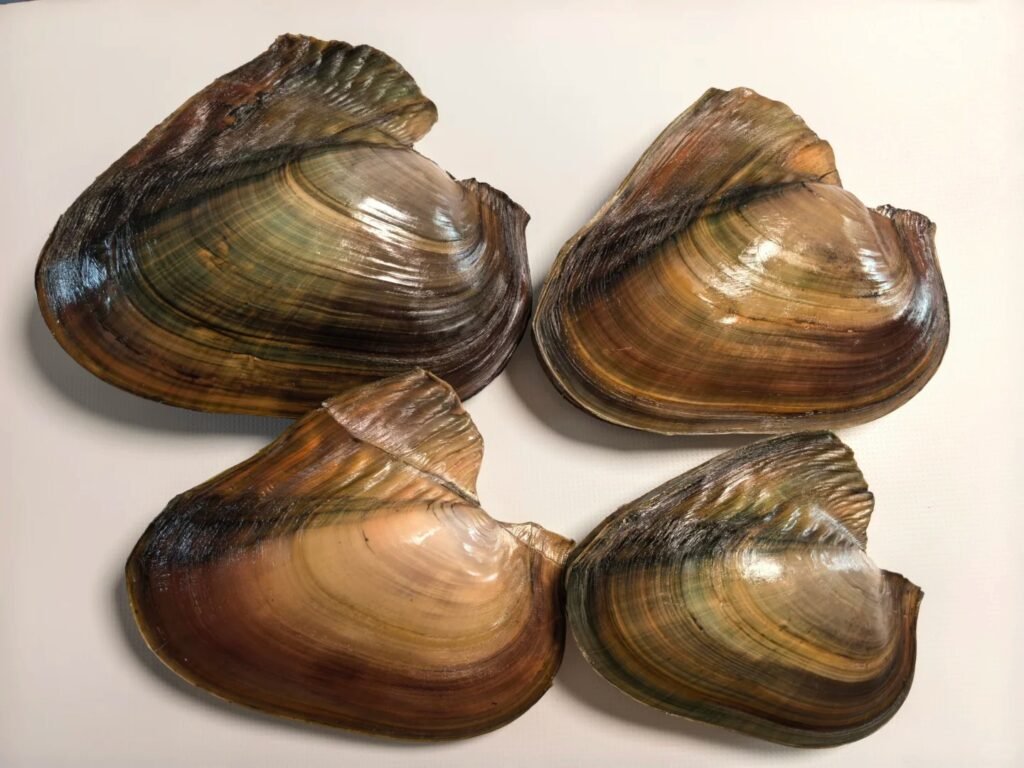
The cockscomb mussel (Cristaria plicata) is a large freshwater mussel found in parts of Asia. Its name refers to the distinctive shape of its shell, which has a raised, ridged appearance along the upper edge. Some individuals grow exceptionally large: although shell length varies, reports describe maximum lengths exceeding 400 millimeters.
The species has a history of use in freshwater pearl cultivation, particularly in China. Its large body and broad mantle provide substantial tissue for pearl-producing procedures, making it useful for certain cultivation techniques.
However, size alone does not guarantee high-quality pearls. The pearls produced by cockscomb mussels have historically included a substantial proportion of lower-grade material, and the species has largely been surpassed by the triangle sail mussel in the production of higher-quality freshwater pearls.
Cockscomb mussels can also be used in research and in the study of mussel-derived biological materials. Their value, however, depends on the intended application rather than on a single advantage across all uses.
Biwa Pearl Mussel
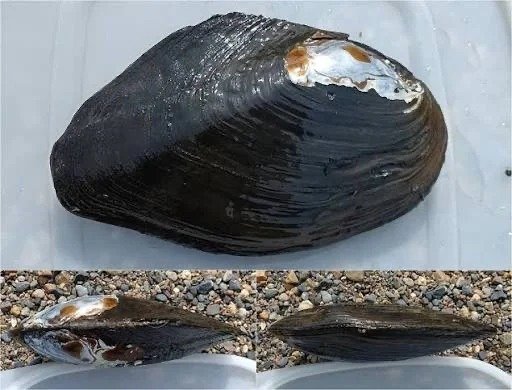
The Biwa pearl mussel (Hyriopsis schlegelii) is native to Japan and is closely associated with the country’s freshwater pearl farming tradition. It was historically cultivated in Lake Biwa, Japan’s largest freshwater lake, and has also been introduced into China for pearl breeding and cultivation.
Its shell differs in shape from that of the triangle sail mussel, and the species has attracted interest for its pearl-producing characteristics. In particular, researchers and pearl farmers have explored its use in breeding programs designed to improve pearl quality.
One important development has been crossbreeding the Biwa pearl mussel with the Chinese triangle sail mussel. These hybrids have been used in freshwater pearl cultivation in China and Japan, with research reporting improvements in certain commercially valuable pearl traits.
The Biwa pearl mussel is therefore important not only for its historical role in Japanese pearl farming but also for its contribution to modern freshwater pearl breeding. Its performance, like that of other cultured pearl mussels, depends on the strain, cultivation method, and growing environment.
Chinese Pond Mussel
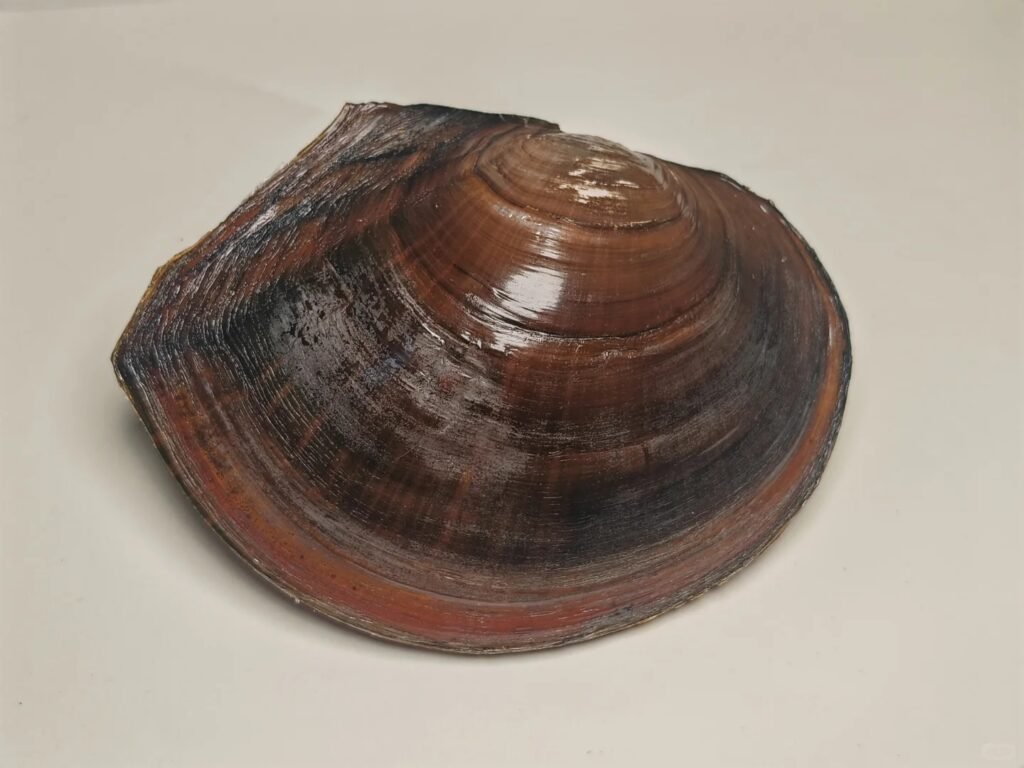
The Chinese pond mussel (Sinanodonta woodiana) is a widespread freshwater mussel found in many parts of Asia and introduced to other regions. It lives in freshwater habitats such as rivers, lakes, and ponds, where it filters suspended particles from the water.
Although the Chinese pond mussel is a familiar freshwater species, it should not be confused with the triangle sail mussel, which is one of the principal species used in China’s commercial freshwater pearl industry. The two have different shell characteristics and should be discussed separately when comparing pearl-producing mussels.
The Chinese pond mussel is also relevant to freshwater ecology and resource management. However, its presence in a waterway does not automatically make it a suitable choice for commercial pearl farming. Pearl-producing performance depends on the species, the cultivation technique, and the conditions under which the mussels are raised.
For this reason, it is best to distinguish between mussels that are common in freshwater habitats and those that have an established role in commercial pearl production.
Hybrid Pearl Mussel: The Kangle Mussel
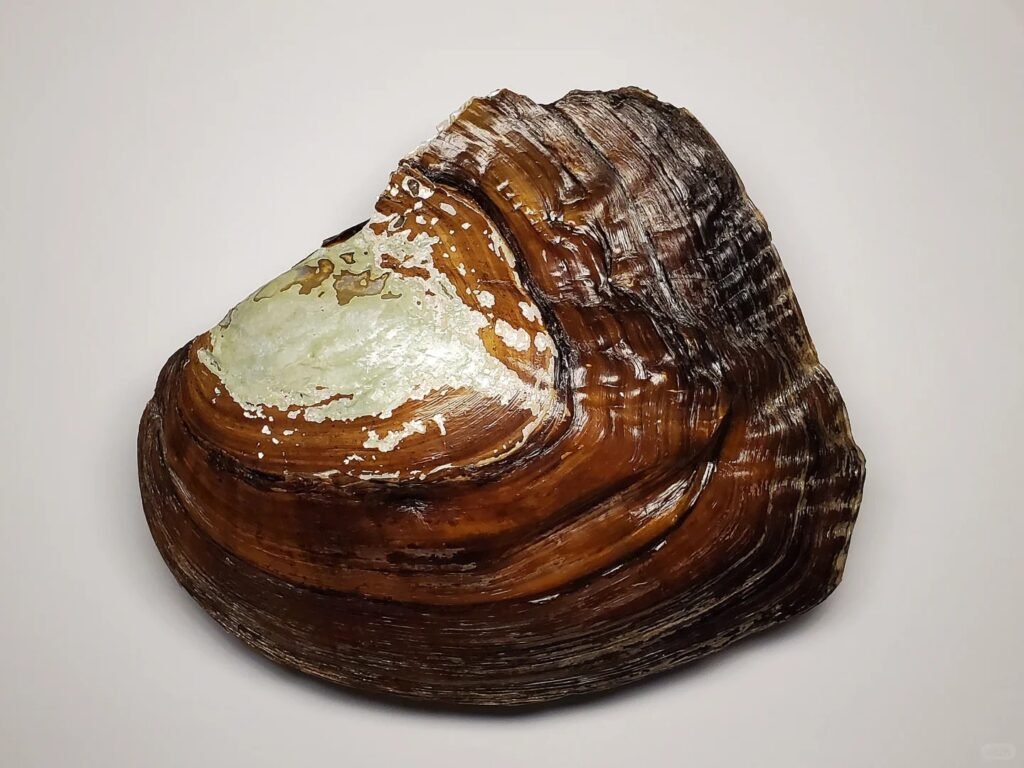
Freshwater pearl farming has advanced through selective breeding as well as the use of different mussel species. One notable example is the Kangle mussel, a hybrid developed by crossing the triangle sail mussel (Hyriopsis cumingii) with the Biwa pearl mussel (Hyriopsis schlegelii).
The two parent species have different characteristics, and breeders have explored their combination to improve commercially valuable pearl traits. Research has reported that Kangle mussels can show hybrid vigor in certain characteristics, including the production of higher-quality pearls.
A study of China’s freshwater pearl industry published by the Gemological Institute of America describes the role of this hybrid in the development of modern pearl cultivation techniques. More recent research has also examined the use of hybrid mussels in Japanese freshwater pearl farming.
The Kangle mussel is not a separate naturally occurring species; it is a hybrid used in breeding and cultivation. Its importance lies in how selective crossbreeding can help farmers develop mussels with desirable characteristics.
As with other cultured pearl mussels, results vary with the parent stock, breeding methods, cultivation practices, and growing conditions.