
“Freshwater pearls are graded based on size, luster, shape, color, and surface quality. But if you’re shopping for pearls, don’t let size be your only deciding factor. Luster has a much greater influence on a pearl’s value. When choosing pearls, remember this: luster determines value, while size determines presence.” — The Taihu Pearl Team
Comparing Freshwater Pearl Grades
| Grade | What to Expect |
|---|---|
| AAAA | The highest quality, with mirror-like luster and very few surface imperfections. But the finest pearl isn’t necessarily the largest. It’s the one that catches the light beautifully, with a soft, refined glow that seems to come from within. |
| AAA | Bright, attractive luster, a clean surface, and a nearly round shape. |
| AA | Moderate luster, with more noticeable surface imperfections. |
| A | Softer luster and visible surface imperfections. |
How to Grade Freshwater Pearls
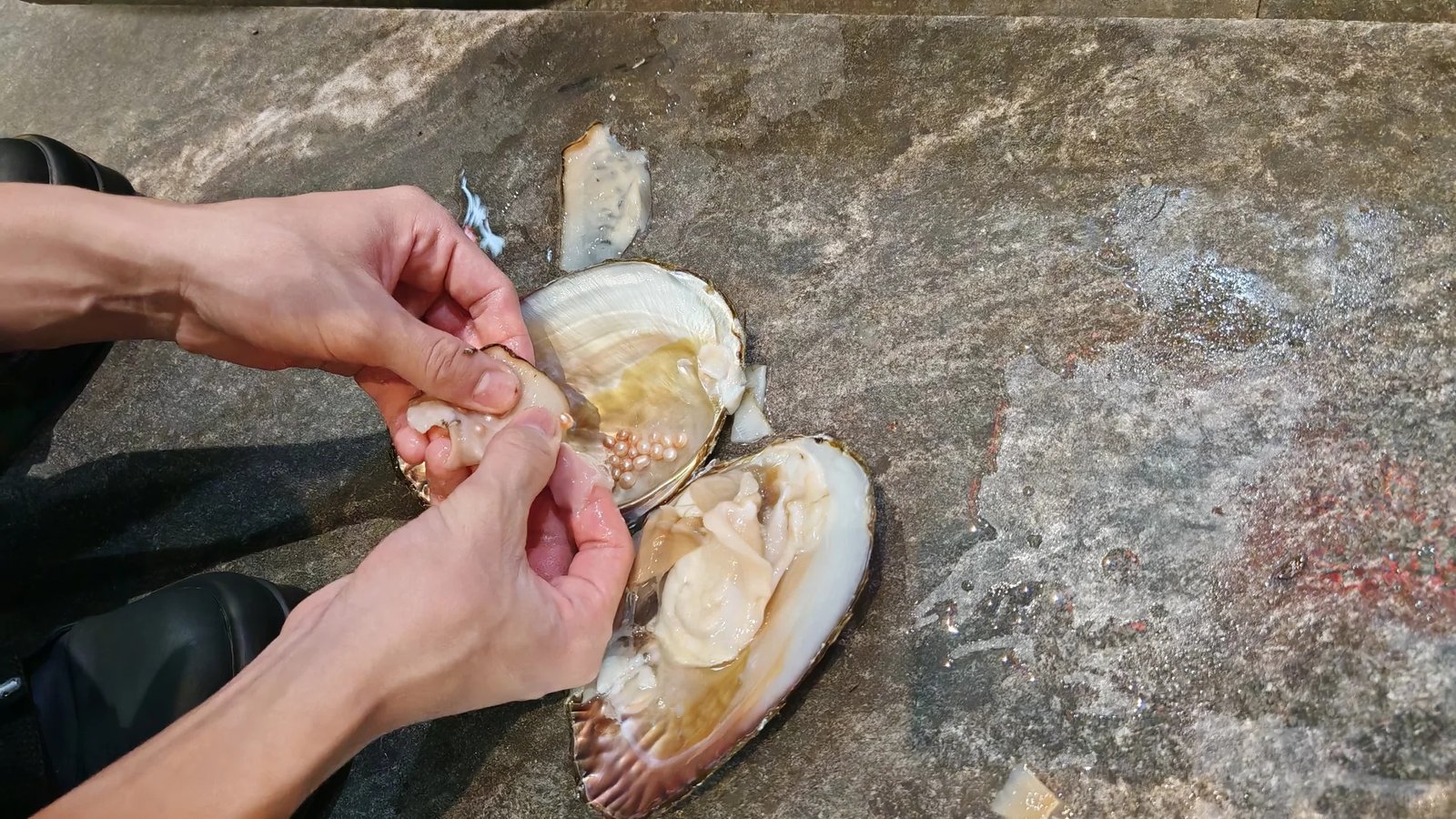
The Gemological Institute of America (GIA) identifies seven key factors for evaluating pearls, and China also has its own freshwater pearl grading standards. Drawing on both, Taihu Pearl has developed a grading system of its own. Let’s look at the factors that go into evaluating pearl quality.
Luster: The Most Important Factor to Look At
Luster refers to how brightly and clearly a pearl reflects light, including how sharply it reflects nearby objects and surroundings.
It’s one of the first things you notice when looking at a pearl, and it can make a big difference in its overall appeal. A pearl with poor luster may look dull or chalky, while one with bright, sharp reflections has a much more vibrant appearance. In general, the brighter and more defined a pearl’s reflections are, the more valuable it tends to be.
Larger Pearls Are Rarer
Large freshwater pearls are genuinely rare. Most cultured freshwater pearls are harvested at sizes under 12.0 mm, while exceptionally large pearls are much harder to find.
When other quality factors are comparable, larger pearls generally command higher prices.
Pearl Shape: Rounder Pearls Are More Valuable
Unlike manufactured products, pearls grow naturally inside their hosts. That’s why perfectly round pearls are relatively rare and tend to be more valuable.
But round isn’t the only shape worth appreciating. Many pearl lovers are drawn to the distinctive character of baroque pearls, which may be off-round, drop-shaped, or asymmetrical. These pearls are also evaluated for their symmetry and overall shape.
Surface Quality: The Cleaner, the Better
A pearl’s surface has a lot to do with its overall appearance and value. Pearls with smooth, clean surfaces and fewer visible imperfections—such as pinholes, scratches, chalky spots, or wrinkles—are generally more highly valued.
Of course, freshwater pearls are natural products, so some surface imperfections are to be expected, even when they’re too small to notice with the naked eye. That’s why we never describe our pearls as completely flawless.
Pearl Color: It Comes Down to Personal Preference
Classic white pearls remain a favorite, but freshwater pearls come in a variety of colors, and there’s no single shade that everyone prefers. Ultimately, choosing a pearl color comes down to personal taste.
At Taihu Pearl, we grade our freshwater pearls from A to AAAAA based on several factors: surface quality, luster, how well the pearls match one another, and shape—including roundness and symmetry.
Freshwater Pearl Certificates
We often get questions about freshwater pearl certificates, so here’s what you should know before making a purchase.
If you’re buying a pearl for a collection or as a special gift, you may prefer one that comes with an internationally recognized certificate. This can provide an additional level of credibility and help document the pearl’s characteristics and quality.
For an everyday gift, a Chinese certificate may be sufficient to verify that the pearl is genuine. International testing can be expensive, and the added certification cost may also increase the final price of the pearl.
If you need a professional appraisal, here are three marks to look for:
- CMA mark: Indicates a testing institution’s government-recognized qualification. It is a basic requirement for a legitimate certificate.
- National laboratory accreditation mark: CNAS
- International laboratory accreditation mark: CAL
Finally, keep in mind that a certificate is a reference, not a measure of a pearl’s value on its own. Some sellers use the word “certified” as a selling point, presenting lower-level certificates as proof of premium quality. In some cases, the certificate may not even correspond to the pearl being sold.